Real Estate Buyer Checklist Template Review
I have spent years reviewing machine embroidery design assets, testing them on everything from delicate baby onesies to heavy-duty work aprons. When I first saw the Real Estate Buyer Checklist Template, my initial reaction was one of professional curiosity. It is categorized under Graphic Templates and Graphics, which immediately signals a specific workflow: this is an editable asset meant for Canva, likely intended as a digital tool or a print-to-embroidery source. But how does a checklist concept translate into thread? Does it hold up when stitched onto fabric, or does it look like a clumsy attempt at typography?
In my experience, the most successful embroidery projects are those that solve a problem while looking beautiful. The Real Estate Buyer Checklist Template has a distinct utility. It feels practical, organized, and clean. Unlike many decorative designs that rely solely on whimsy, this design carries a mood of efficiency and trust. It suggests a structured approach to a major life event. For a designer, this means it fits perfectly into the "personalized gift" or "small business merchandise" categories where clients value clarity and professionalism.
From Digital Concept to Stitched Reality
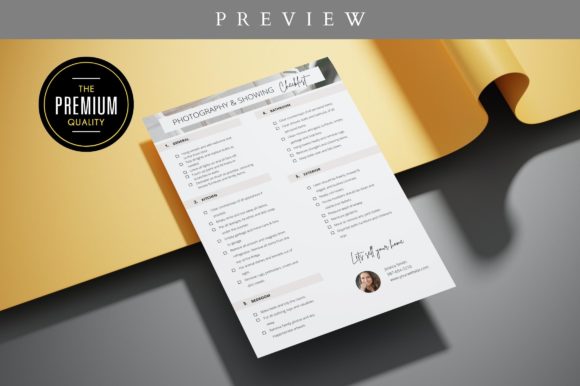
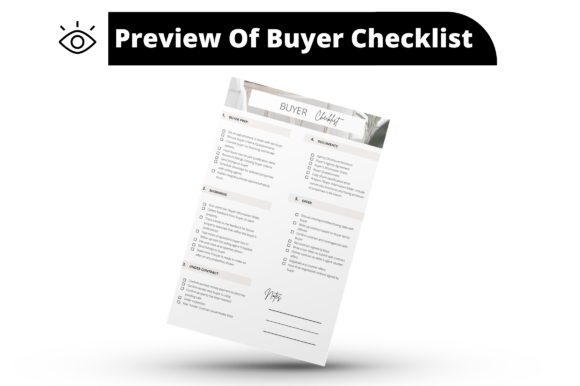
The real test of any design comes when you move it from the screen to the hoop. Imagine preparing a custom embroidered tote bag for a client who just closed their first home purchase. You want to give them something useful, not just a generic "Home Sweet Home." This is where the Real Estate Buyer Checklist Template shines. If converted properly for embroidery, the layout offers a natural grid-like structure that mimics a printed list. This works beautifully on a large canvas like a kitchen towel or a pillow cover, where the checklist items can be represented by small running stitches or tiny satin stitch boxes.
However, I must be honest about the challenges. A checklist relies heavily on legibility. If you are planning to use this for custom apparel like a sweatshirt or a t-shirt, you need to be very careful with the font size and the spacing between lines. Embroidery is three-dimensional; thread takes up space. What looks like crisp text in a Canva mockup might blur together if the stitch density is too high or if the lettering is too tight. For a tote bag design, the sturdy cotton canvas provides a stable base, allowing for finer details. On a stretchy jersey fabric, however, the risk of puckering increases significantly, especially around the dense areas of the checklist.
Where This Design Fits Best
After simulating various scenarios, I believe the Real Estate Buyer Checklist Template finds its sweet spot in home decor and boutique branding. Picture a holiday gift set for a new homeowner. You could pair a high-quality tea towel featuring the checklist with a matching embroidered patch for a denim jacket. The visual appeal here is strong because the design speaks to a shared experience—the excitement and stress of buying a house. It creates an immediate connection with the buyer.
For Etsy sellers and craft business owners, this design offers a unique angle. Instead of competing with thousands of generic floral patterns, you can offer a niche product. A set of embroidered patches featuring different stages of the buying process (e.g., "Offer Made," "Inspection Done," "Keys Received") could be a hit for holiday embroidery campaigns. It transforms a mundane administrative task into a celebratory milestone. This adds significant value to the finished product, making it feel more thoughtful and tailored than a standard mass-produced item.
It also works exceptionally well for commercial embroidery targeting real estate agencies. Imagine a branded cap or a polo shirt given to agents during open houses. The checklist theme reinforces their role as guides and organizers. It projects an image of competence and attention to detail, which is exactly what a realtor wants to project to their clients. When used on a pillow cover or a blanket for a nursery, it serves as a modern, minimalist piece of decor that stands out against traditional baby themes.
Navigating Technical Challenges
While the concept is solid, there are specific areas where you must exercise caution. If you attempt to embroider this on a curved surface like a baseball cap, the straight lines of the checklist may distort, breaking the visual rhythm. Small hoop sizes are another pitfall. Trying to fit a detailed checklist into a 4x4 inch area often results in text that is too small to read once stitched. In embroidery, if the customer cannot read it, the design fails its primary purpose.
Fabric texture plays a massive role in how this design is perceived. On a smooth, light-colored fabric, the contrast will be sharp, and the details will pop. However, on a textured fabric like fleece or a dark, heathered material, the fine lines of a checklist might get lost. Dark fabrics require careful selection of thread colors; a light gray thread on black might not show up clearly enough to convey the message. Always test your color combinations before committing to a full production run.
Another critical consideration is the durability of the design. Checklists often contain small details or thin lines. If these are stitched with too much density, the fabric underneath can become stiff and uncomfortable, particularly on baby clothes or items that will be washed frequently. For products that need frequent washing, such as kitchen towels or aprons, ensure that the stabilizer choice is robust enough to prevent the design from shifting or distorting over time.
Practical Designer Notes for Execution
If you are ready to bring the Real Estate Buyer Checklist Template to life, follow these steps to ensure a professional result. First, always test the design on scrap fabric that matches the weight and texture of your final project. This helps you identify potential issues with hoop size and tension before you ruin a customer's garment. Second, review the stitch density carefully. If the design includes fill stitches for checkboxes, make sure they are not so thick that they create a hard lump on the fabric.
Inspect small details closely. If the template includes tiny lettering, consider enlarging it or simplifying the font. Sometimes, replacing small text with simple icons or symbols can improve readability without losing the meaning. Also, test the design in black and white mockups to ensure the contrast holds up visually. Compare how it looks on both light and dark backgrounds to confirm versatility.
Don't forget the technical side. Use the proper stabilizer for your fabric type; cut-away stabilizers are generally best for woven fabrics like cotton canvas, while tear-away might suffice for temporary projects. Confirm whether the file format you receive is compatible with your machine and software. Since this is an editable digital embroidery file originally designed for Canva, you may need to digitize it yourself or convert it to a format your machine accepts. Ensure you understand the licensing terms before selling finished items made from this design. Are you allowed to sell the physical products? Is there a limit on the number of units?
Finally, think about the presentation. A well-executed Real Estate Buyer Checklist Template isn't just a pattern; it is a statement. When customers see a high-quality, readable, and professionally stitched checklist on a handmade product, it builds trust. It shows that you care about the details and that the item is worth the investment. Whether you are creating a personalized gift for a friend or launching a line of small shop products, this design has the potential to stand out in a crowded market.
By approaching the Real Estate Buyer Checklist Template with a critical eye and a focus on technical execution, you can turn a simple graphic concept into a valuable finished product. It bridges the gap between digital utility and tactile art, offering a fresh perspective for designers looking to expand their offerings beyond traditional motifs.